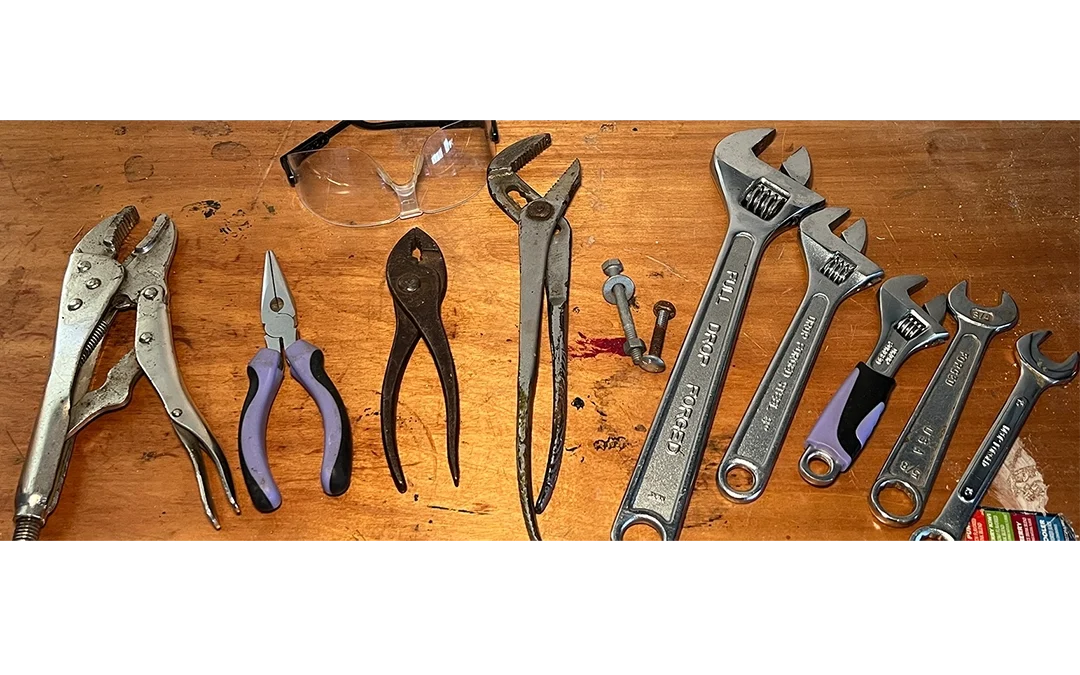
Pliers and Wrenches: Save Money! Get Only Wrenches & Pliers You Need!
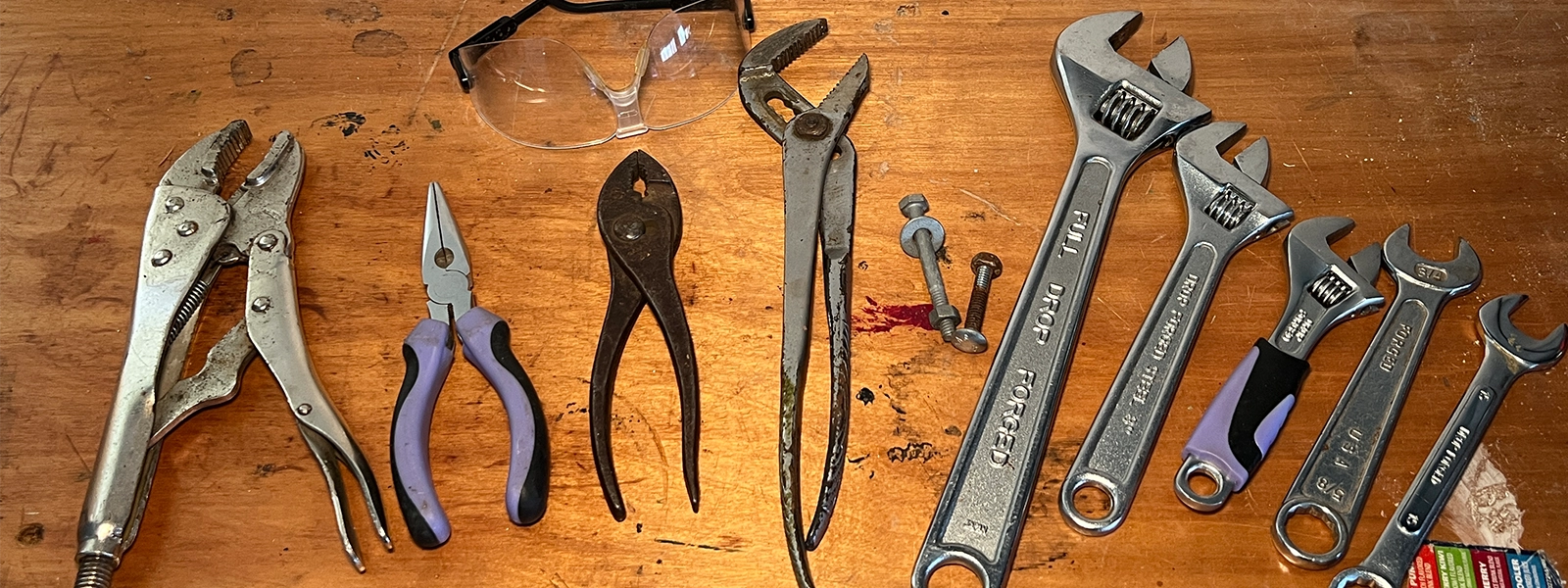
Which Pliers and Wrenches Does a DIY'er Really Need?
If you’re new to DIY, you don’t need every plier or wrench in the store. Don't waste your money get a few pieces to start and add additional pieces as you need them.
At Must Own Tools we exist to give clear, Safety First - Always, and Fix it Fast No Bull tool advice.
Sign Up for the "Nailed It" Newsletter 
Enter your email address below.
WHATS IN THIS ARTICLE?
• You don’t need every plier or wrench in the store
• The pliers and wrenches you need in your DIY tool kit.
• Safety First Always
• What about damaged tools?
• What Type Of Pliers Should I Use?
• Must Have, Pliers & Wrenches/a>
• Common Mistakes to Avoid
• How To Use Pliers & Wrenches- FAQ's
For additional information on selecting hand tools, download this CDC guide to selecting hand tools.
Pliers
- Slip-joint pliers: general grip, basic household tasks
- Tongue-and-groove pliers (often called “Channel Locks”): larger nuts, plumbing connections
- Needle-nose pliers" tight spaces, small parts and wires. For a deeper dive into pliers, read our, "When Should You Use a Pair of Pliers in Home Repair?" post.
Wrenches
- Adjustable wrenches:flexible for many nut and bolt sizes. Great tool for larger jobs requiring many different sized wrenches
- Combination wrench set (open + box end): a few common sizes (metric or SAE depending on your hardware). Great for remodels, builds and auto repair.
With those pliers and wrenches, you can handle most basic home repairs, simple plumbing, and lots of “why is this loose?” situations around the house. Don't forget vehicle, landscaping tools toys and a multitude of additional DIY uses.
The trick is knowing what each tool is for, how to use it safely, and how not to wreck nuts, bolts, (wasted money and time) or injury youself.
Safety First – Always (Pliers & Wrenches Can Bite)
Pliers and wrenches look simple, but hand tools cause a lot of injuries when used wrong—pinched fingers, smashed knuckles, and even serious eye injuries from slipping tools and flying parts.
At Must Own Tools, our mission is simple and clear:
- Give clear, No Bull tool advice
- Safety first, always, even with “basic” hand tools.
What about Damaged Tools?
Never use damaged tools.* OSHA specifically warns against using wrenches with jaws sprung to the point of slippage.
Always pull, don’t push, on a wrench if you can. Pulling gives you more control and saves your knuckles if it slips.
Keep fingers away from pinch points between plier handles and jaws.
Wear safety glasses when there’s any chance a part could snap, fly, or break loose.
 Stay Safe: Hand Tool Safety Basics for DIYers – Safety First, Always
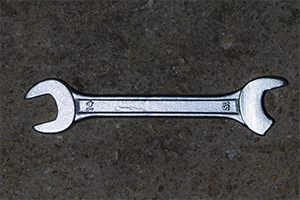
Pliers 101: What Type Of Pliers Should I Use?
You have a multitude of plier choices but Must Own Tools suggests DIY'ers focus on these three.
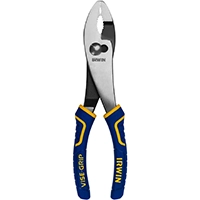
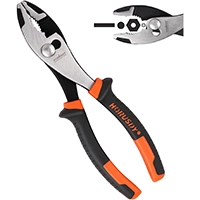
Slip-Joint Pliers
- What are slip-joint pliers: → Pliers with a pivot that can “slip” into two positions, changing jaw opening.
- We suggest you use them for:
- Gripping small parts
- Light Bending
- Holding parts still while you work on it
How to use slip-joint pliers safely:
- Grip the object near the middle of the jaws, not the tips.
- Squeeze handles firmly, but don’t crush delicate parts
- Keep your other hand out of the way in case your grip on the pliers slip.
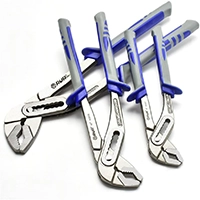
Tongue-and-Groove Pliers (a.k.a. Channel Locks)
- What are Tongue-and-Groove pliers: Pliers with offset, adjustable jaws that are great for pipes and big fittings.
- Loosening or tightening plumbing fittings
- Grabbing flat or irregular shapes
- DIY plumbing hand tools kit
Best for:
How to use tongue-and-groove pliers safely:
- Adjust jaws so they fit snugly around the fitting—too loose and they’ll slip.
- Grip with your whole hand; avoid one- or two-finger “pinch” grips.
- When breaking loose a stubborn fitting, pull the pliers toward you rather than pushing awaible to avoid sudden slips whenever possible.
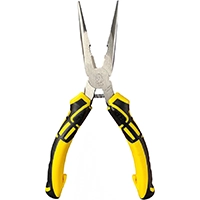
Needle Nose Pliers
- What are Needle Nose Pliers: → Long, slim jaws designed for precision gripping.
- We suggest you use them for:
- Bending small wires
- Reaching into tight spots (inside fixtures, behind panels)
- Pulling small nails, staples, or clips
How to use Needle Nose Pliers safely:
- Use them for precision, not heavy twisting. The jaws are thinner and can bend if you overload them.
- Avoid twisting hard side-to-side while gripping something thick—switch to stronger pliers for that.
Pliers & Wrenches 101: Must Have, Pliers & Wrenches (Click Image To Buy)
Three Pliers & Wrenches 101 suggested for every DIY tool kit. You don't need every wrench available. Huge sets of multiple wrenches are not necessary for the majority of DIY projects. Only purchase what you need. Click through the links to view and buy these wrenches now.
We are an Amazon affiliate and may earn a small commission on any purchase

Slip Joint Pliers
WorkPro 8' Slip Joint Pliers
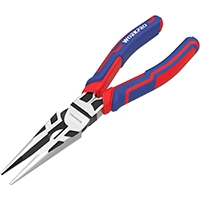
Needle Nose Pliers
8" Needle Nose Pliers WorkPro
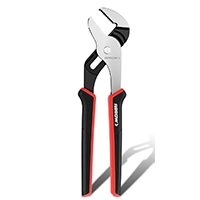
Channel Lock Pliers
Arrow 10" Groove Joint Pliers
Adjustable Wrench (also known as a "Crescent Wrench")
- What are Adjustable Wrenches?: A wrench with a movable jaw so it adjusts to fit a range of nut sizes.
- Use them for:
- General home repairs
- Occasional plumbing (fix supply lines, traps)
- Perfect when you don’t have the exact size wrench
How to use an adjustable wrench (safely):
- Open the jaws and fit the wrench around the nut or bolt.
- Tighten the jaws until they’re snug—no visible gap.
- Position the fixed jaw on the side you’ll be pulling toward you.
- Pull, don’t push: pull the wrench toward your body to reduce slips and save your knuckles.
- If the wrench slips or you feel movement in the jaws, stop and retighten.
Safety + OSHA-style rule: Never use an adjustable wrench with jaws so loose that slippage is likely, and don’t use a pipe or cheater bar to “extend” it.
Combination Wrenches
- What are Combination Wrenches: Combinations wrenches have an open-end on one side and a box-end on the other.
- Use them for:
- Bolts or nuts that need a lot of turning on the same nuts/bolts (bikes, cars, certain fixtures)
- When you want the most secure, non-slip grip
How to use a combination wrench:
- Use the box-end (closed ring) first whenever you can — it grips more sides and is less likely to slip.
- Tighten the jaws until they’re snug—no visible gap.
- Use the open-end wrench when you can’t get the box-end due to lack of space./li>
- Just like with all other wrenches, position yourself to pull whenever possible.
No Bull Tip: Even a small set of popular combination wrench sizes in either metric or SAE is a big upgrade from using only an adjustable wrench.
Pliers & Wrench Safety: Common Mistakes to Avoid
Here are some of the biggest beginner mistakes—and quick fixes:
- Use pliers instead of a wrench on nuts and bolts
- Pliers can round off the corners of nuts and bolts, and may not provide a consistent grip
- A general Rule to follow: Use pliers to hold, wrenches to turn—especially on fasteners you care about.
- Wrenches with loose or sprung jaws
- Broken wrenches with loose jaws are more likely to slip and smash knuckles or damage the fastener.
- If the adjustable wrench can’t clamp a bolt head or nut snugly, replace it.
- Pull instead of push
- When the wrench slips, your hand can slam into something hard.
- Position your wrench so you can pull toward you whenever possible.
- Using the wrong pliers for heavy tasks
- Don't use needle-nose pliers for heavy twisting, or tiny pliers on big parts, this can bend or break tools.
- Use tongue-and-groove pliers for larger, tougher grips.
- Always wear eye protection
- Stubborn parts can suddenly release and send tools or pieces flying.
- Keep a pair of safety glasses inj your tool kit and make them part of your DIY project routine.
No Bull Verdict: What wrenches should be in your tool kit now.
Two rules to consider when making this decision. 1) Keep it simple. 2) Don't go crazy and buy huge kits or wrenches you don't need immediately.
Add these wrenches to your tool kit NOW.
- Slip-Joint Pliers
- 10' Tongue-and-groove pliers
- Needle-nose pliers
- 8-10" adjustable wrench
- Small set of combination wrenches
Add these wrenches later - as needed
- Locking pliers for stubborn fasteners
- Pipe wrench for more serious plumbing work
- Larger or stubby combination wrenches if your projects demand it
- What pliers should a DIY'er buy first?
- What’s the difference between slip-joint and tongue-and-groove pliers?
- What’s the difference between slip-joint and tongue-and-groove pliers?
- Can I use wrenches and pliers for all my plumbing work?
Slip Joint pliers, Tongue-and-groove, pliers, Needle nose pliers
Start with three: slip-joint pliers, tongue-and-groove pliers, and needle-nose pliers. Slip-joint pliers are your general-purpose grab-and-hold tool, tongue-and-groove pliers help with larger fittings and beginner plumbing tasks, and needle-nose pliers handle tight spaces and small parts.
It's all about the number of positions
Slip-joint pliers have a pivot that adjusts between two (sometimes more) positions to open the jaws wider for different-sized objects. Tongue-and-groove pliers have a series of slots that let the jaws adjust over a wider range and stay more parallel, which gives a stronger grip on larger nuts, pipes, and fittings.
It's all about the number of positions
Slip-joint pliers have a pivot that adjusts between two (sometimes more) positions to open the jaws wider for different-sized objects. Tongue-and-groove pliers have a series of slots that let the jaws adjust over a wider range and stay more parallel, which gives a stronger grip on larger nuts, pipes, and fittings.
Gas lines, main water shutoffs, or anything you don’t fully understand, it’s safer to call a pro.
They’re essential beginner plumbing hand tools, but there are limits. Tightening a loose supply line or trap is fine for beginners. If you’re dealing with gas lines, main water shutoffs, or anything you don’t fully understand, it’s safer to call a pro. Tools can’t replace experience when the stakes involve leaks or safety hazards.