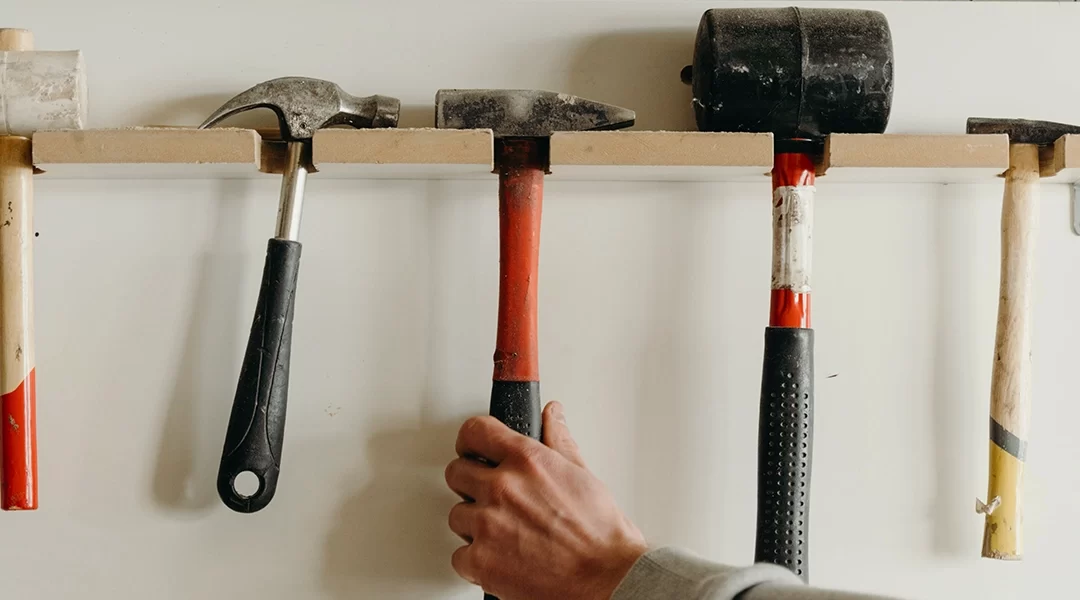

All You Need to Nail it – The Essential Guide to Handheld Hammers
How to determine which handheld hammers are right for your DIY job.
What type of handheld hammers should you have in your toolbox?
You’ve got the elbow grease, the DIY spirit, and a vision of your perfect home renovation or construction project. But there’s one essential tool you can’t overlook—the handheld hammer.
With its origins dating back centuries and different types of hammers crafted for unique jobs, a hammer is not just a hammer. It is an extension of your hand, a silent partner in your projects, and a critical tool to help you get the job done right.
Understanding Handheld Hammer Types and Their Specific Uses
Before you start your repair or construction jobs, it’s crucial to understand that not all hammers are right for the DIY job you need to tackle.
Claw Hammer
The standard hammer, used for just about any type of DIY job:
A standard claw hammer is the most used hammer in the toolbox. With a nail-pulling claw on one side and a flat striking surface on the other, it’s perfect for a range of DIY tasks; from framing and woodworking to general household repairs and down to the gentle touch needed for picture hanging.
WHEN TO USE:
-
Driving and removing nails
-
Light Demolition
-
Chiseling and cutting materials
-
Use it to help break free stuck connections
CARE INSTRUCTIONS:
Wipe the head and handle down after every use to prevent rust and clean grime off the claw to keep it in good working condition for prying.
STORAGE SUGGESTIONS:
Store it in a dry environment, perhaps hanging on a pegboard.
BALL PEEN HAMMER
For the Metalworker:
A handheld ball peen hammer has a round peen on one side, traditionally used in metalworking for ‘peening’ or shaping soft metal. The opposite side has a flat, cross, or straight peen, perfect for chiseling, riveting, and flattening metal.
WHEN TO USE:
-
Shaping metal surfaces
-
Riveting
-
Peening or ‘punching’, which involves striking the face of one piece to cause it to curl around the edge of another
-
Use the flat side to help smooth out and flatten metal
CARE INSTRUCTIONS:
Clean and maintain the hammer’s faces for a smooth, undamaged surface to ensure precision in your metalwork.
STORAGE SUGGESTIONS:
Secure it to prevent hammering surfaces from being scratched. Pegboard hooks that support the handle can work well here. Just “throwing” it in a tool box is not recommended, you want to prevent the scratching of the “ball peen” side of the hammer.
Sledge Hammer
For Heavy Hitting:
If you’re dealing with seriously large jobs, a sledgehammer’s heavy, double-faced head will drive nails, spikes, and other heavy-hitting needs.
WHEN TO USE:
-
Demolition jobs
-
Driving stakes and posts
-
Breaking up concrete and masonry
-
Drive large spikes in large projects suggest as deck building
-
Sometimes used for splitting wood with a metal wedge
CARE INSTRUCTIONS:
Clean and maintain the hammer’s faces for a smooth, undamaged surface to ensure precision in your metalwork.
STORAGE SUGGESTIONS:
Inspect the handle regularly for signs of wear or splintering that could lead to a snapped handle during use. You also want to avoid wood splinters in the handle.
Framing Hammer
For Heavy Hitting:
If you’re dealing with seriously large jobs, a sledgehammer’s heavy, double-faced head will drive nails, spikes, and other heavy-hitting needs.
WHEN TO USE:
-
For framing houses
-
Heavy and repetitive nailing
-
Working with larger, heavier nails
CARE INSTRUCTIONS:
Regularly inspect the face and handle for wear and tear; these hammers can wear out quickly with heavy use.
STORAGE SUGGESTIONS:
Keep it in a separate, designated area of your toolbox to avoid damage to other tools.
Caring For Your Hammers
A handheld hammer is only as good as the care you give it. With the proper care and storage your hammer can last for years and pass from one generation to the next. Follow these essential care tips:
Regular Cleaning
After use, wipe down the surface of the hammer to remove any debris or moisture. For stubborn dirt, use a mild solvent and a toothbrush.
Rust Prevention:
Apply a light coat of oil or rust inhibitor to the hammer head, especially if you live in a humid climate.
Handle Maintenance:
Keep wooden handles conditioned with linseed oil, or consider upgrading to a fiberglass handle for increased durability.
Face Check:
To check for damage to the hammer’s striking face, run your finger along the edges. Any bumps or nicks should be filed down with a metal file.
Handle Grip:
A good grip on the handle can prevent the hammer from slipping during a swing. If the grip is loose or showing wear, replace it.
Hardware Check:
Screws or wedges that keep the hammerhead tight on the handle should be regularly tightened or replaced.
Storing Your Hammers the Right Way
Proper storage can prolong the life of your hammers and prevent tool-related accidents. Here are a few tips:
Organizing Your Handheld Hammers:
Sort your hammers by type and size. This makes it easier to find what you need and also protects the more delicate tools from heavier ones.
Container Considerations:
Consider a tool chest, wall-mounted pegboard, or even custom-built racks for easy visibility and access.
Handle Up:
Store your hammers with the handle up to avoid damaging the edge of the striking face or other objects it might be leaning against.
Handle Down:
Frequently used hammers can be stored handle down for quick access, but ensure it’s against a wall or placed in a spot where it can’t be knocked over easily.
Don’t Hammer in a Nail Blindly
A hammer is a tool that demands respect and attention. Blindly wielding one around without the proper knowledge and care could lead to accidents and damage. By understanding the various types of hammers and their specific uses, you’re ensuring that your DIY projects are not only successful but also safe and efficient.
In the end, it’s not just about hitting the nail on the head; it’s about hitting it right. With the right hammer knowledge and a bit of practice, you’ll soon be a master at the art of the perfect strike. So grab your hammer, get to work, and remember to always take care of your trusty companion. Happy DIY-ing!
Additional Tips
-
Always wear safety goggles when using a hammer to protect your eyes from flying debris.
-
Consider investing in different sizes and types of hammers for specific tasks to avoid damaging your tools.
-
Practice proper hammering techniques, such as keeping a firm grip on the handle and using controlled swings, to prevent injury.